
With the year’s final weeks approaching, we looked back at the stories, practices, and trends that resonated most with the Civitas Learning community in 2022. This list celebrates the amazing work our partners do each day to help their students thrive.
Below, explore popular topics like using student success analytics to manage capacity constraints, build coordinated student success networks, and enhance student outcomes. Plus, find a round-up of links to our most-read articles and resources on those topics.
Coordinated Student Success Networks
Isolated efforts or interventions that depend on specific departments can’t consistently deliver improved student outcomes. Sustainable student success depends on multi-faceted, data-activated coalitions that bridge efforts across student and academic affairs.
To best coordinate efforts, leaders and their teams need a single source of knowledge that provides a full picture of a student’s experience to clarify where best to focus. A holistic record of all communication (emails, referrals, SMS, messages, announcements, surveys, and notes) provides the visibility and context needed to maintain a cohesive frontline of student support.
With shared context and unified goals, everyone on campus can collaborate to provide seamless support that drives student outcomes and eases inefficiencies.
Explore how the University of Texas at San Antonio positively impacts their students’ futures, and fosters institutional sustainability.

Find out how a powerful set of proactive success initiatives resulted in enrollment, retention, and graduation gains.
Hear how UTSA builds a student success coalition that incorporates everyone on campus, using data and analytics to unify institutional goals.
Providing the Right Support, Instead of the Same Support
Despite best intentions, traditional intervention practices like mass communications and first come, first serve appointments aren’t as effective as they used to be. Several partners are flipping the script on student engagement by providing students with the right support instead of the same support.
Instead of treating every student the same, these institutions use actionable analytics, like persistence or completion predictions, to diversify how they deliver support. In this new approach, advisors can match their level of engagement with the level of student needs – allowing them to become more efficient and effective. By connecting students with the right support instead of the same support, advisors can proactively provide students with the support they need at scale.

Find out how data-informed advising practices help those least likely to persist succeed at Northeastern State University.

Find out how Snow College used analytics in its strategic planning process to ease advising capacity constraints and improve student success for its most vulnerable students.

Find out how connecting students to the right support can help your team better manage advising caseloads.
In this on-demand webinar, learn how institutions use the Civitas Learning platform to create capacity for advisors and deliver proactive, holistic support that students need.
Hear how data analytics and intelligent case management software ease capacity constraints and improve advisor impact.
Investment in Revenue Generating Student Success Initiatives
As concerns over financial sustainability continue, leaders are shifting away from a spending mindset (what’s the cost?) to an investment mindset (what’s the return on investment in this program?) regarding student success.
This shift in thinking allows leaders to understand the real impact of initiatives on student outcomes. It provides important insight into what works and for whom. This enables leaders to reallocate limited resources to the combination of practices that most significantly improve student success – leading to more efficient use of resources and more effective initiatives.

Address enrollment declines with these top student retention strategies from the University of Central Oklahoma Student Advocacy team.

Ensure every student success initiative supports continuing student enrollment and institutional financial sustainability by incorporating persistence as a key success metric.
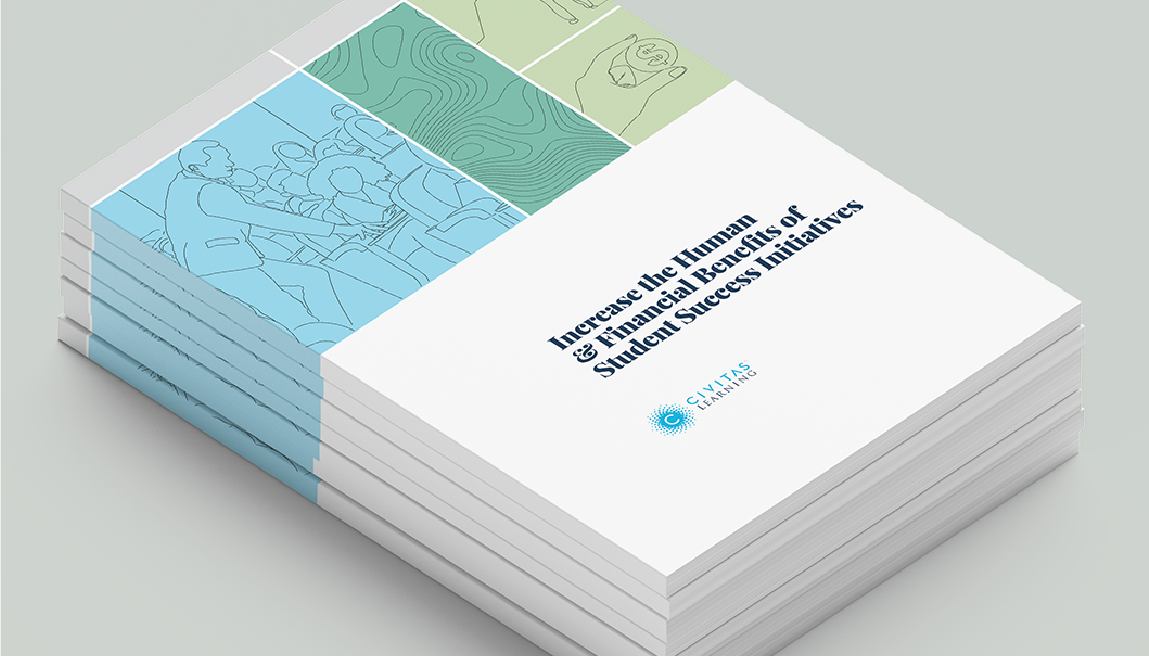
Explore four ways Civitas Learning partners develop student success initiatives that boost student outcomes and ROI.

Calculate the impact of your student success initiatives to understand how they drive student outcomes and contribute to ROI.
Understanding What Works for Specific Student Groups
Enrollment declines are a big challenge for higher education, which makes it even more important than ever to invest strategically in the most effective innovations.
Institutions providing effective student support have developed a holistic understanding of the challenges that impact student persistence toward graduation. These institutions understand that how they support specific student groups matters.
Disaggregating student data provides student success teams with the information they need to uncover unique factors that impact their students and understand which student success initiatives best support them. For example, they know that recommending tutoring to a student whose academic performance is affected by their duties as a single parent fails to address the root cause of the student’s issues.

A Civitas Learning analysis of 15 partner institutions revealed that simply making it easier for students to create conflict-free schedules boosted persistence.
2**. Unlock Enrollment Strategies by Segmenting Student Data**

Find out how segmenting student data unlocks precise, proactive student success practices that improve student retention and institutional financial health.
5 Questions to Ask Before Buying an AI Agent for Higher Ed
Before buying an AI agent, ask what information it's acting on, not just what it can do. Learn five questions every higher ed leader should ask before making a decision.
Read →blog postInaction Has a Price: The Hidden Cost of Delayed Student Success Investments
Every semester of delay has a cost. Learn how waiting on student success technology impacts students, advisor capacity, and institutional revenue.
Read →blog postBeyond Student Success: Evaluating Higher Ed Software, Vendors, & Institutional Fit
Features are easy to evaluate. Coordination is harder — and far more important to long-term institutional outcomes.
Read →Bring your questions. Leave with an estimate you can defend.
A 45-minute working session: we start from your public IPEDS figures, show what the platform found at institutions like yours, and size the outcome — before anyone touches your data.